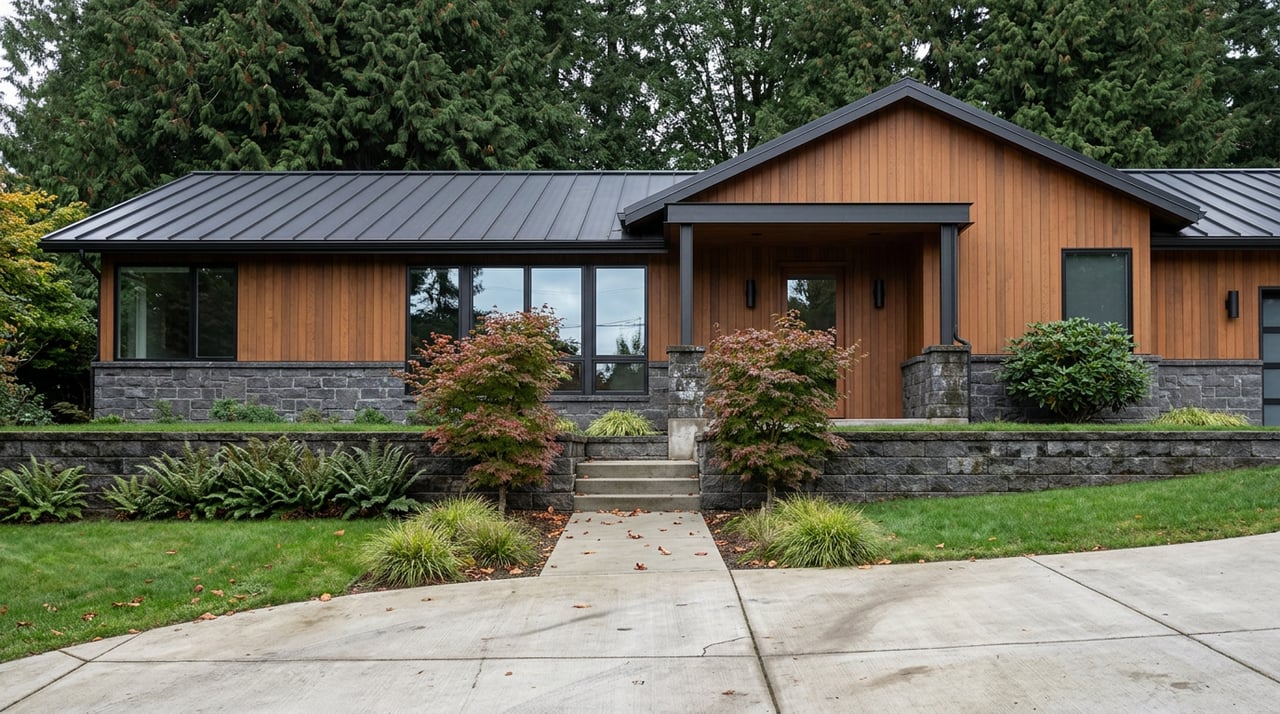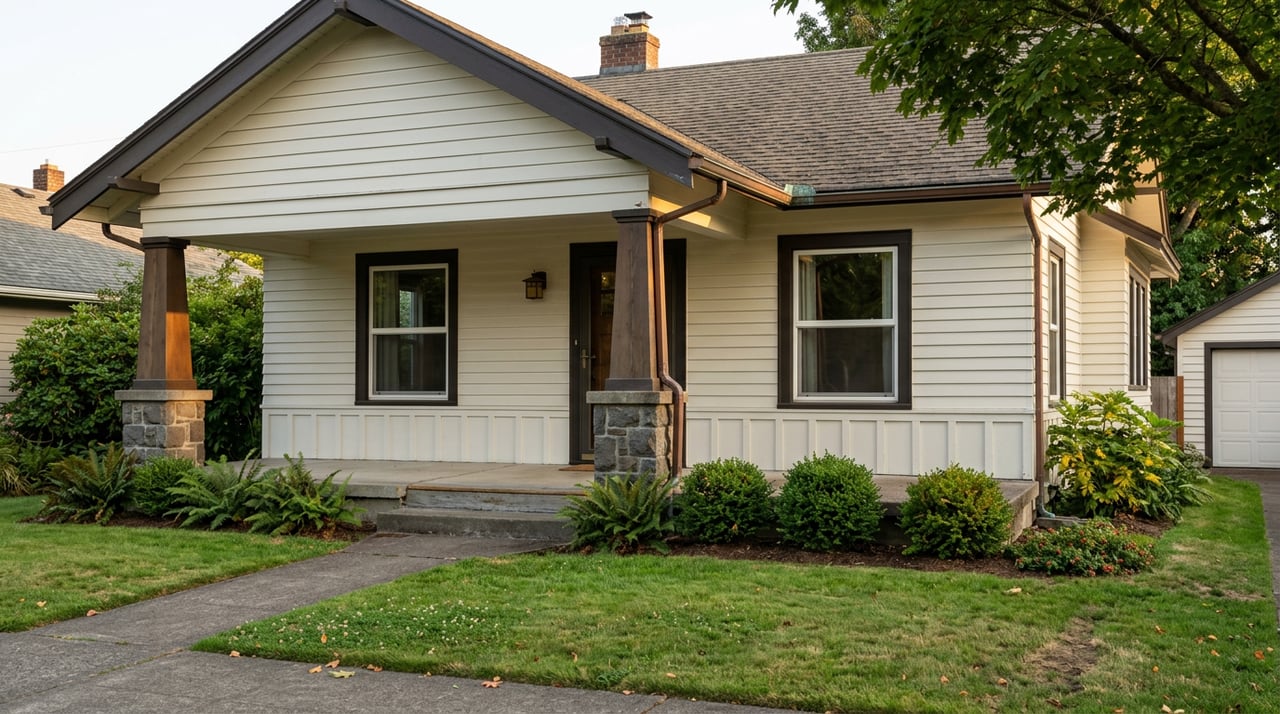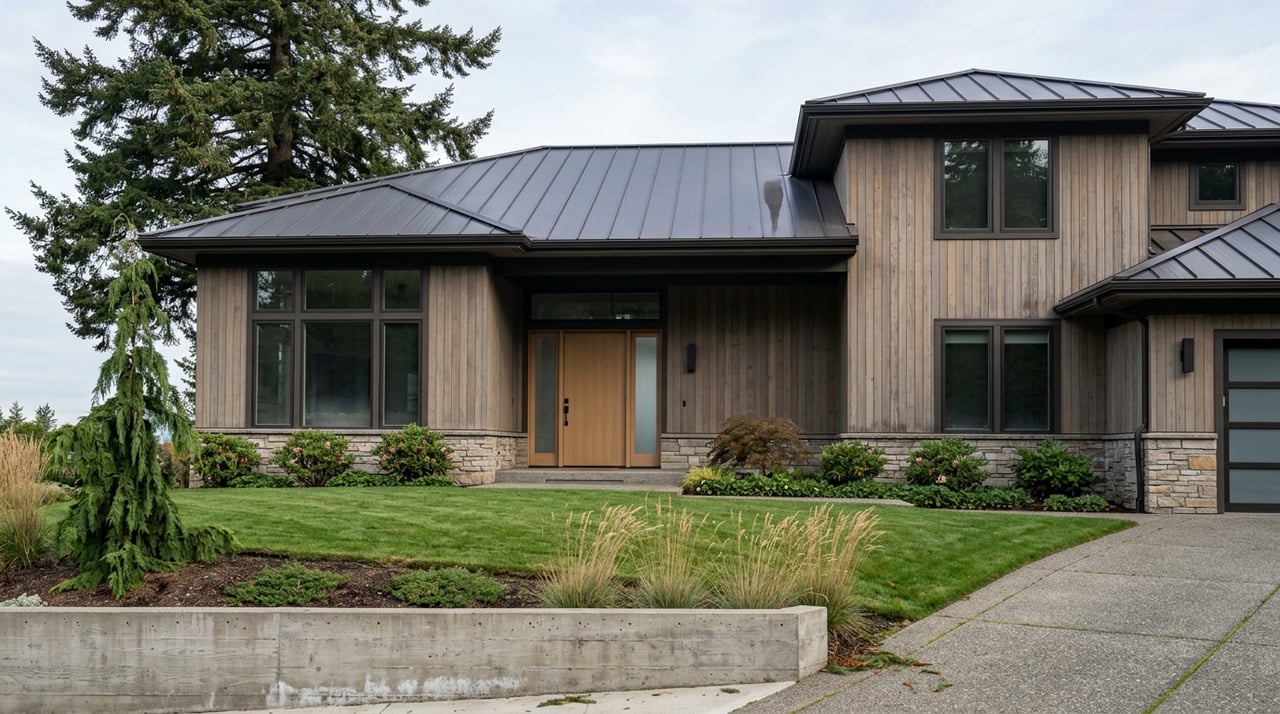
Search "Prune Hill homes for sale" and you'll find a $649,000 listing on one page and a seven-figure custom estate on the next, both wearing the same neighborhood name. Scroll long enough and the pattern holds across dozens of streets: modest ranch homes from the early 2000s sitting a few turns of the road from architect-built compounds with wine cellars and elevator shafts. If you're comparing Camas neighborhoods by median price, Prune Hill is the one that will lie to you first, because "Prune Hill" was never one market to begin with.
A Hill Is Not a Neighborhood
Prune Hill is a geographic feature before it's a real estate category. It's the extinct volcanic vent that rises above the rest of Camas, and its elevation is the whole reason it commands attention: homes up here look down on the Columbia River corridor, the Portland skyline, and on clear days, Mt. Hood. That elevation gets carved into dozens of individually platted subdivisions, each with its own builder, its own era, and its own price ceiling. Crown View Plaza. Prune Hill Estates. Wooded Ridge. Grand Ridge. Sun Dance. Crown Pointe. Hunter Ridge Estates. Blakes Highland. All of them sit under the single umbrella term buyers type into a search bar, and none of them behave like the others.
When a portal or a market report gives you a "Prune Hill median," it's averaging a $649,000 Prune Hill Estates ranch home with a Blakes Highland estate that can run well into seven figures. That average describes no actual house you can walk through. It's a number built from two different products that happen to share an address.
Which Way You Face Changes the Number
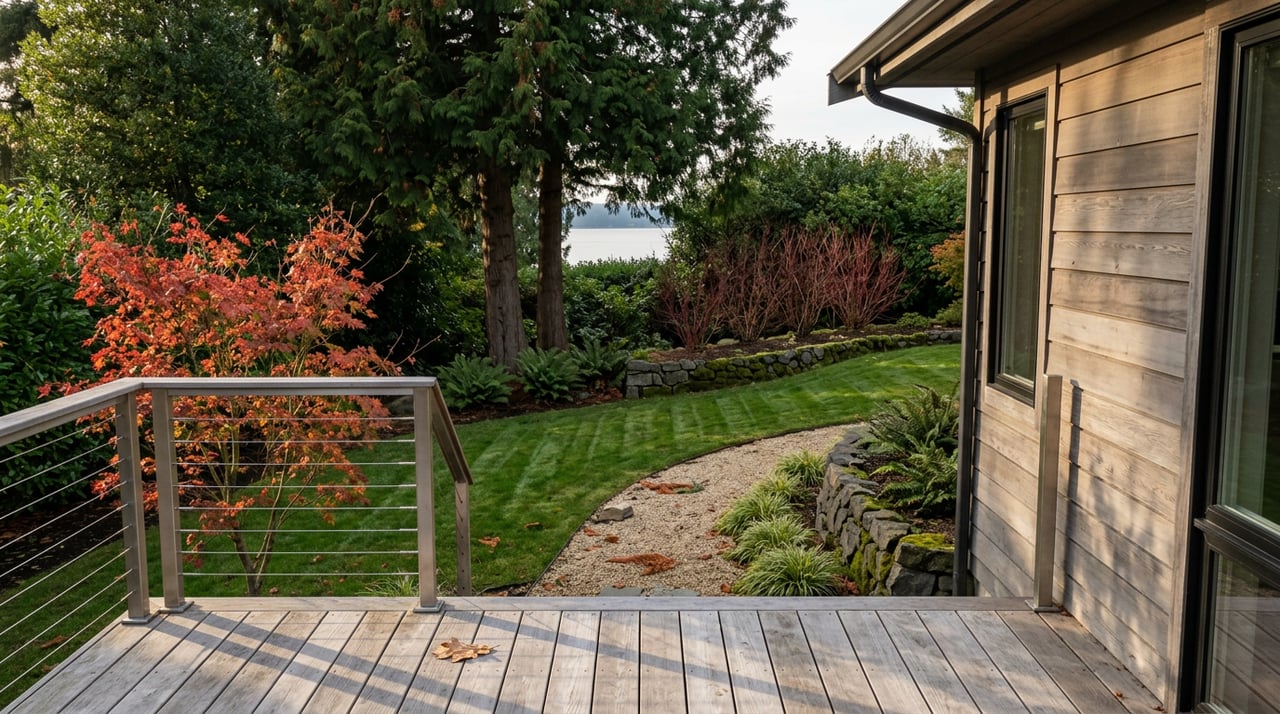
The hill splits along a ridge line, and which side of it a home sits on does more to set price than almost any other single factor. The southern face looks toward the Columbia River, the Portland skyline, and city lights at night, the kind of view that shows up in every listing photo as the reason to buy. The northern slope faces the Cascades, Mt. St. Helens, and Lacamas Lake below, a different view with its own appeal but a different price tag attached. Buyers who assume "Prune Hill" means one view corridor routinely tour a home on one ridge and make an offer on the other, and the price differential between the two orientations is real enough that it's worth confirming before you fall for a listing photo.
Here's how that plays out across some of the hill's named subdivisions, based on recent pricing patterns:
| Subdivision | Approximate price band | What sets it apart |
|---|---|---|
| Prune Hill Estates | Around $649,000 | Roughly 2,100 square feet, an accessible entry point to the address |
| Crown View Plaza | Mid-to-upper $600s | Half a mile from Dorothy Fox Elementary, corner lots and wrap-around porches |
| Wooded Ridge | Upper $600s to $800s | Early 2000s builds, confirmed river and skyline views on a treed lot |
| Blakes Highland | Into seven figures | Homes ranging from roughly 2,700 to over 6,300 square feet |
| Grand Ridge, Sun Dance, Crown Pointe, Hunter Ridge Estates | Roughly $900,000 into the multi-millions | The hill's most coveted south-facing view lots |
Anyone comparing "Prune Hill" to another Camas neighborhood on price alone is really comparing an entire range to a single number, and the range spans more than half a million dollars from top to bottom.
Wooded Ridge Breaks the Obvious Story
Here's the detail that should reshape how you think about buying up here. If view orientation alone set the price, Wooded Ridge should command luxury-tier numbers, because it genuinely has them: confirmed Columbia River and Portland skyline views from elevated lots, the same visual asset that justifies seven-figure pricing a few streets over. Instead, recent Wooded Ridge listings have landed in the upper $600s to $800s, a price band that sits closer to the hill's entry tier than its luxury one.
The reason isn't the view. It's everything stacked around the view. Wooded Ridge was built out around 2001 and 2002, on lots running roughly 8,700 to 10,000 square feet, with home sizes and finish packages typical of that era rather than the larger custom footprints found in subdivisions like Blakes Highland. The view is real. The price tier is set by the vintage, the lot size, and whether the home was custom-built to maximize that view or simply happens to catch it from a standard early-2000s floor plan.
That's the mechanism worth carrying into any search on this hill. View orientation moves price, but it doesn't move it alone. Subdivision vintage, lot size, and whether a home was purpose-built around its sightline all layer on top of the north-south split, which is why two homes with nearly identical views can land in different price tiers depending on which subdivision they belong to.
Why the Camas Citywide Median Won't Help You Here
As of August 2026, Camas as a whole has a median sale price sitting somewhere in the $760,000 to $825,000 range depending on the data window you use, with price per square foot generally falling between about $296 and $362 across recent closings. Days on market have stretched out this year too, moving from the low twenties a year ago into the 30s this summer as inventory has loosened slightly and the market has cooled from its earlier pace.
That citywide number is a reasonable anchor if you're comparing Camas broadly to a neighboring city. It's close to useless once you're standing on Prune Hill, because the hill's own price spread runs from below that citywide median to well above it. A Prune Hill Estates or Crown View Plaza buyer is transacting below the city's typical price point. A Blakes Highland or Grand Ridge buyer is transacting well above it. Both are buying "on Prune Hill." Neither purchase looks anything like the citywide median suggests it should.
What This Means If You're Actually Touring the Hill
The practical takeaway is simple: stop comparing to "Prune Hill" and start comparing to the specific subdivision. Ask which named community a listing sits in, which ridge face it's on, and whether the view is a built-in feature of the home's design or a bonus the lot happens to catch. HOA structures vary by subdivision too. Dues across the hill's newer communities typically run in the range of $50 to $150 a month, though certain gated enclaves push past $400, and most carry firm rules on things like RV parking and exterior paint that are worth reading before you fall for a floor plan.
It's also worth planning around the hill's physical reality. Much of Prune Hill is car-dependent, the roads climb steeply enough to matter in an ice event, and a grocery run from the upper subdivisions is a planned trip rather than a quick errand. None of that is a reason to avoid the hill. It's a reason to know exactly which version of Prune Hill you're buying before you write an offer, rather than discovering the tradeoffs after closing.
A Few Questions Worth Asking Before You Tour
Is Prune Hill walkable to downtown Camas? Downtown itself is walkable once you're there, but the hill's elevation and street layout mean most Prune Hill residents drive down for daily errands rather than walk.
Does "Prune Hill" mean one elementary school? Not automatically. Some subdivisions feed into Dorothy Fox Elementary, one of the district's highest-rated schools, but boundaries shift by street and are worth confirming for any specific address rather than assumed from the neighborhood name.
Why do two homes with similar views price so differently? Vintage, lot size, and whether the home was custom-built around the sightline all layer on top of which ridge face it sits on. A treed, view-oriented lot in an early-2000s subdivision can price well below a comparable view in a newer custom-built enclave.
If you're weighing a move to Prune Hill, or trying to figure out which subdivision actually fits your budget and your view priorities, Peter Cutile Homes can walk the specific streets with you and separate the entry-tier addresses from the luxury ones before you fall for a listing photo. Schedule a consultation and we'll help you read the hill the way a local would.