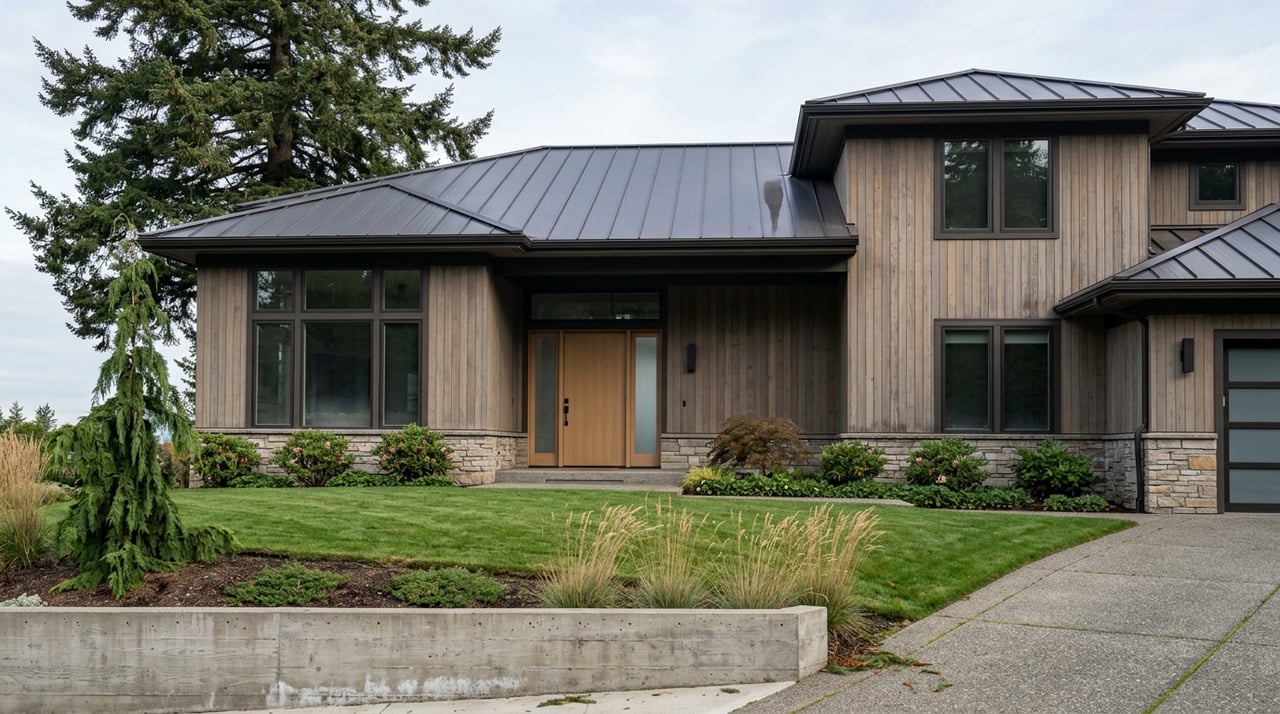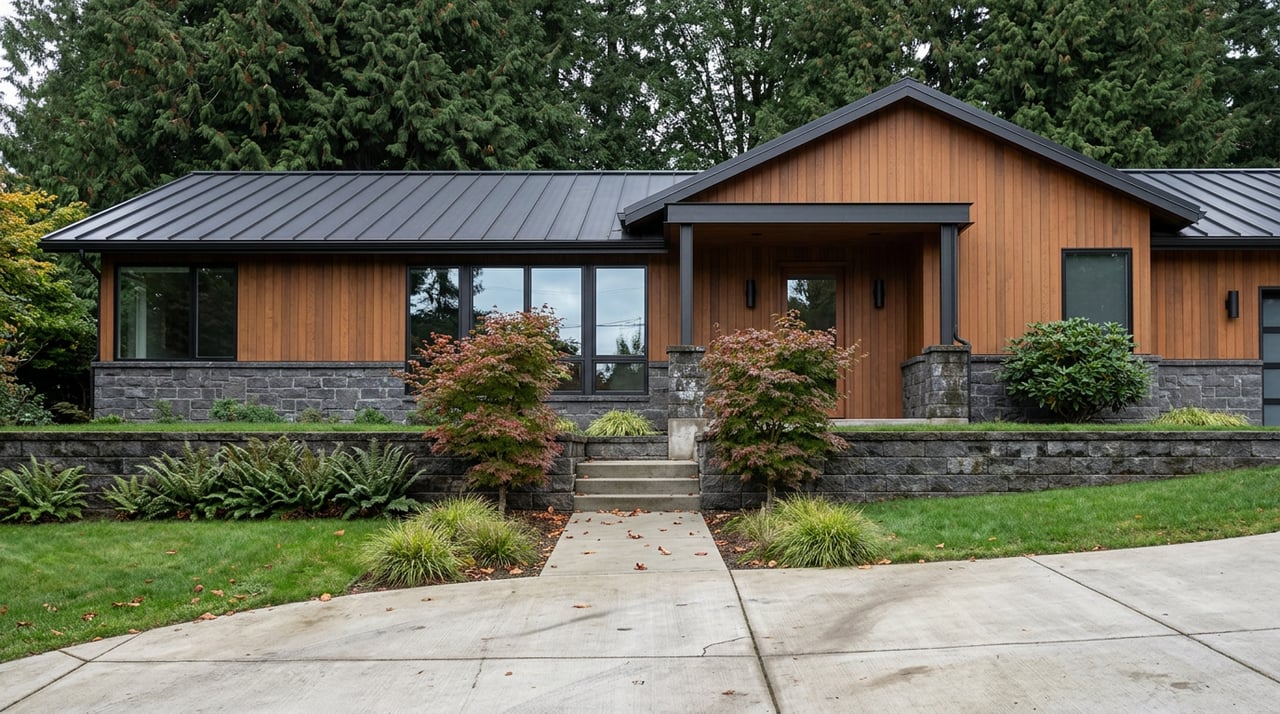
Camas's citywide median sale price sits at $826,000 for the three months ending in May 2026, and downtown Camas, the pocket that includes Crown Park, is one of the few areas in the city where buyers can still land meaningfully below that number. Read as a straight discount, that looks like the best entry point left in Camas. Read as a transaction, it looks different once an inspector opens the electrical panel.
That is the part of buying in Crown Park that rarely makes it into a listing description. A lower price per square foot in a neighborhood built mostly between 1920 and 1965 is not the same discount as a lower price per square foot on a fifteen-year-old subdivision home. It is a deferred bill, and the size of that bill depends entirely on what's behind the walls of the specific house you're standing in.
The Number That Looks Like a Bargain
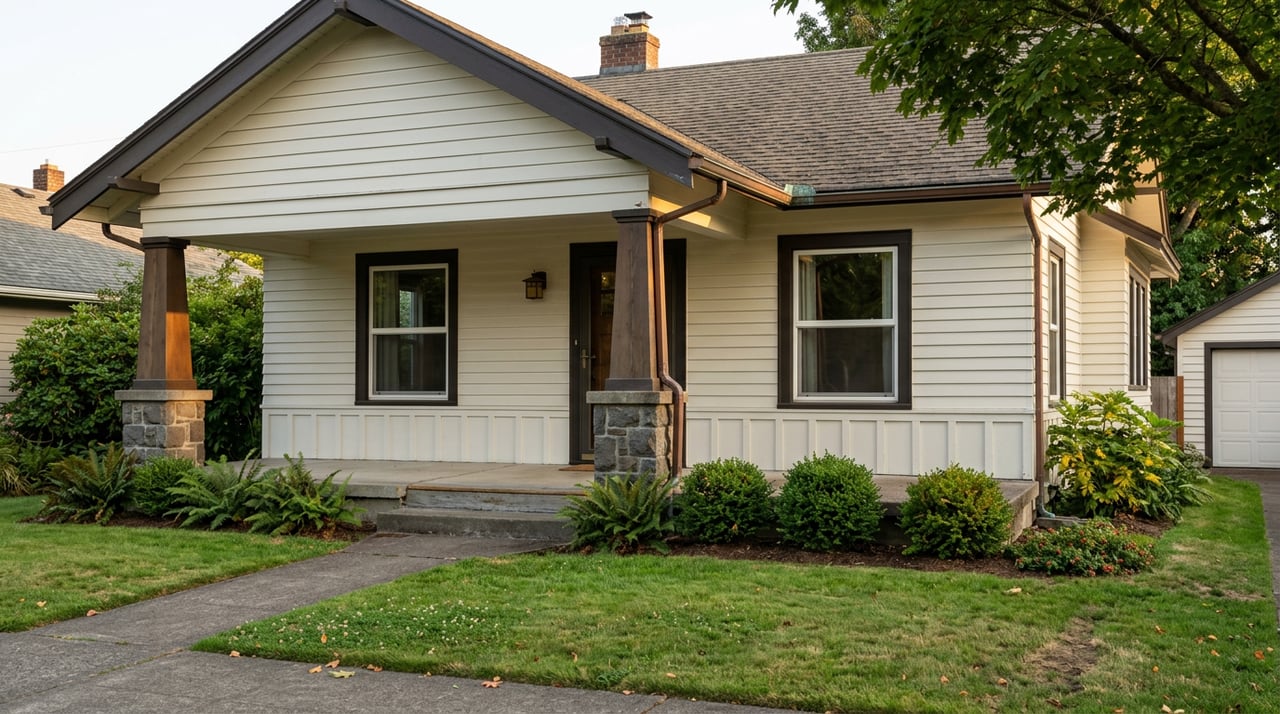
Crown Park earns its reputation honestly. It is the closest thing Camas has to old-town character: 1920s craftsman bungalows, mid-century cottages, tree-lined streets that predate the subdivisions east of town, and a short walk to the Liberty Theatre, which has run continuously as Camas's only movie house since it opened as the Granada in 1927. Homes here were built mostly between 1920 and 1965, a stretch that spans three very different eras of plumbing and wiring codes.
That construction window is the whole story. A Crown Park listing priced below the citywide median isn't cheaper because the neighborhood is less desirable. It's priced that way because the house is older, and older houses in this specific pocket of Camas carry a documented, predictable set of systems that need attention that a 2001 Prune Hill build simply doesn't have.
A lower price per square foot isn't a bargain if a $10,000 to $25,000 repipe is sitting on the other side of the inspection contingency.
That's not a hypothetical. It's the pattern local inspectors describe when they work this specific stretch of Camas.
What's Actually Behind a 1940s Crown Park Wall
Home inspectors who work Camas regularly describe a consistent profile for the oldest residential blocks in the city: galvanized supply pipes, cast iron drain lines, aging electrical panels, and crawlspace moisture that shows up on nearly every visit. Buried oil tanks are also a recurring finding on pre-1990 properties, and Washington State treats an undisclosed tank as a real liability, not a curiosity.
None of this means a Crown Park bungalow is a bad buy. It means the inspection period does more work here than it does on a fifteen-year-old Grass Valley build. A full repipe replacing galvanized steel with PEX or copper typically runs $10,000 to $25,000 depending on the home's size, and that range comes directly from inspectors who work this market week to week, not a national estimate pulled from a different climate.
Add a sewer scope to the list too. Camas sits on hilly, rocky terrain, and cast iron or old Orangeburg drain lines that have been in the ground for sixty-plus years are worth verifying before you remove your inspection contingency, not after.
The Insurance Call Nobody Budgets For
Here's the friction point that catches buyers off guard mid-transaction, and it has nothing to do with the inspection report itself. If a Crown Park home still has a Federal Pacific or Zinsco electrical panel, an insurance carrier can decline to write a policy or require replacement before binding coverage. Both panel brands carry documented safety concerns, and carriers treat them as a red flag rather than a cosmetic detail.
This is the moment a lending background actually matters. A financing timeline doesn't pause for an insurance denial. If your lender needs a bound policy to clear to close and your carrier comes back asking for panel replacement first, you're now coordinating an electrician, a re-inspection, and a closing date that was never built around that delay. Buyers who get an insurance quote during the inspection period, not after, are the ones who don't lose their closing date over a panel swap that could have been handled two weeks earlier.
Crown Park vs. the Newer Alternative, Side by Side
| Crown Park (pre-1965 stock) | Newer Camas construction (Grass Valley, post-1990 Prune Hill) | |
|---|---|---|
| Typical systems age | Original or partially updated plumbing and electrical, 60 to 100 years old | Systems installed 1990s to 2020s, still within most service-life windows |
| Common inspection findings | Galvanized pipe, cast iron drains, dated panels, possible buried oil tank | Crawlspace moisture on hillside lots, aging composite roofs on 1990s builds, minor grading issues on newer lots |
| Insurance friction | Possible panel replacement requirement before binding coverage | Rarely an issue outside of wildfire zone proximity near Lacamas Lake trails |
| Walkability | Minutes to downtown Camas, Liberty Theatre, Crown Park itself | Car-dependent on Prune Hill, more walkable in newer Grass Valley pockets |
| HOA | None on most Crown Park lots | $50 to $150 a month typical on post-1990 Prune Hill and Grass Valley, higher in gated sections |
Neither column is the objectively better buy. They're different products wearing similar price tags, and the right one depends on whether you'd rather pay upfront in HOA dues and a longer commute, or pay later in repiping and a possible panel swap.
What the Walk to Downtown Is Actually Worth
The case for Crown Park isn't just nostalgia. It's proximity to a downtown that keeps investing in itself. The city approved a full remodel of Crown Park in late 2023, and the $6.3 million improvement project broke ground in June 2024, funded in part by a $500,000 state Recreation and Conservation Office grant. That's not a rumor about future value. It's a public commitment to the park the neighborhood is named for, and it sits inside the same walk radius as the Liberty Theatre and the rest of downtown's independent shops and restaurants.
If you're the kind of buyer who values a five-minute walk to a movie, a coffee shop, and a park over a three-car garage and a wraparound porch with a Cascade view, that lifestyle has a real dollar value even if it doesn't show up as a line item on a settlement statement. The mistake is assuming that value cancels out the systems risk automatically. It doesn't. You have to budget for both.
A Short Buyer's Math Before You Write an Offer
Before you get emotionally attached to a Crown Park bungalow, do three things during your inspection window instead of after closing:
- Ask the inspector to specifically identify the panel brand and the supply pipe material, not just note "electrical and plumbing systems are older."
- Call your insurance carrier with the panel brand and the home's age before your contingency deadline, not after your loan is already in underwriting.
- Request any permit history the seller has for plumbing or electrical work, since a partial repipe or panel upgrade already done can eliminate most of the concern above.
That last point matters more than people expect. Plenty of Crown Park homes have already had the galvanized lines swapped or the panel replaced by a previous owner. The house that's already been updated is genuinely the discount it appears to be on paper. The house that hasn't is a different financial commitment wearing the same price tag.
FAQ
Is a Crown Park home still a good buy if the price already looks favorable? It can be, but the favorable price is doing double duty. Part of it reflects genuine value in an older, walkable neighborhood, and part of it is the market pricing in unknown system age. Get the inspection findings and an insurance quote before you decide which part you're actually paying for.
How do I find out if a Crown Park home still has a Federal Pacific or Zinsco panel before I write an offer? Ask the listing agent directly, and if that information isn't available, request it as a condition of your offer or verify it during your inspection period before removing contingencies. A licensed electrician can typically confirm panel brand in a few minutes.
Does every pre-1965 Crown Park home have these issues? No. Plenty have been repiped, rewired, or had oil tanks removed by previous owners, sometimes with permits on file. The point isn't that every older home is a liability. It's that you need to verify system age on each specific property rather than assuming the neighborhood's price level already accounts for it.
Buying in a neighborhood with this much character means budgeting for its age, not just admiring it. If you're weighing a Crown Park bungalow against a newer build elsewhere in Camas and want a straight read on what a specific property's systems are likely to cost you, Peter Cutile can walk through the numbers with you before you write an offer. Schedule a consultation and bring the listing.